Rome's no-fly zones, ENAC rules, and what aerial photography actually means for your visit
Flying a drone over Rome's landmarks is prohibited without special authorisation. Rome's entire historic centre sits inside permanent restricted airspace, covering the Colosseum, Roman Forum, Trevi Fountain, Spanish Steps, Vatican, and the city's major parks. This guide explains the exact rules, who enforces them, what the penalties are, and what visiting photographers should plan instead.
This applies to every visitor, tourist, and professional: recreational and commercial operators face the same no-fly restrictions in Rome. If you are planning a trip and wondering whether aerial shots of the city are possible, read this before you pack your drone.
Italy's drone regulations are set by two bodies working in parallel. The European Union Aviation Safety Agency (EASA) provides the EU-wide framework under Commission Implementing Regulation (EU) 2019/947, which Italy adopted in full from 2021. On top of that, Italy's national civil aviation authority, ENAC (Ente Nazionale per l'Aviazione Civile), layers additional national restrictions, including geographic no-fly zones specific to Italian cities and heritage sites. The ENAC official site states that pilots "must check on d-flight website if the area is allowed for UAS OPEN operations" before any flight.
Rome also adds a municipal layer. The City of Rome requires advance permission from the city administration for any drone filming or photography, even when no ground equipment or road closure is involved. This means three separate authorities, EASA, ENAC, and Roma Capitale, all have a say before a single frame is captured from the air.
TipAlways check all three levels, EU, ENAC, and local municipality, before planning any drone operation in Italy.
| Package | Price | Duration | Photos | Locations |
|---|---|---|---|---|
| Essential | €300 | 1 hour | 30 photos | 1 location |
| Signature | €500 | 2 hours | 50 photos | 2 locations |
| Prestige | €800 | 3 hours | 60 photos | 3 locations |
No. Rome's historic centre carries two permanent prohibited zones, P-243 and P-244 on the D-Flight map, banning all flights from ground level up to approximately 3,500 feet unless explicitly cleared by the relevant authorities. These zones cover the Colosseum, Roman Forum, Vatican City, Trevi Fountain, Spanish Steps, and the city's central parks. Even a sub-250g drone, the kind that requires no licence in many countries, receives no enforcement exemption inside these zones.
The D-Flight portal colour-codes restriction levels: red means an unconditional ban, yellow marks a restricted zone requiring authorisation, and green indicates areas where standard rules apply. Almost everywhere a visitor would want to fly in central Rome shows red. Italian police actively enforce these rules at tourist sites, and two foreign pilots were criminally charged for flying over the Colosseum as recently as October 2023.
TipOpen the D-Flight map before your trip, not on the day. Red zones cover the vast majority of Rome's visitor areas.
All drone operators in Italy must register through the D-Flight portal, the ENAC-approved platform for operator IDs, no-fly zone maps, and flight planning. Drones over 250g require an Operator ID and a passed competency exam for the A1/A3 category. Drones under 250g that carry a camera still require registration in Italy, because Italian rules treat cameras as privacy-sensitive equipment regardless of drone weight. Your EU Operator ID from another member state is valid in Italy under the EASA framework.
Liability insurance is mandatory for every drone in Italy, including sub-250g models. Italy chose not to apply the EASA exemption that lets other EU countries waive insurance for lightweight drones, making it stricter than Germany, France, or Spain on this point. Proof of insurance must be carried during any operation. Commercial operators additionally need a Remote Pilot Licence and specific airspace authorisation from ENAC for operations that could pose risks to public safety or air traffic.
TipNon-EU visitors must hold an EU Operator ID before arriving. Certificates issued by non-EU national authorities are not convertible under current EASA rules.
Permits exist but are rarely granted for photography purposes. Exceptions are generally limited to professional projects with significant justification, such as a film crew shooting a major production or a heritage institution documenting an archaeological site. Even then, the operator must hold all qualifications, including registration, a pilot certificate, and insurance, and will typically need to coordinate with the monument's heritage authority, ENAC, and the local police. Strict conditions apply: defined time windows, maximum altitude limits, and sometimes on-site police supervision.
Casual tourist photography is not considered justification for a permit in a no-fly zone. To film the Colosseum from the air, for example, requires authorisation from the heritage authorities managing the site in addition to ENAC clearance and police approval. That is a complex process arranged well in advance, not something arranged on arrival. The City of Rome requires that all applications go through the city administration at Comune di Roma.
TipIf you are planning a commercial aerial production in Rome, begin the permit process months before your shoot date, not weeks.
Italy's penalties are among the strictest in Europe. Administrative fines for flying without registration or in a restricted zone can be substantial, but the more serious risk is criminal prosecution. Under the Italian Codice della Navigazione, flying in a prohibited zone is a criminal offense, not simply an administrative infraction. This means a potential criminal record, not just a fine. Italian police actively enforce the rules at Rome's tourist sites, and confiscation of the drone on the spot is standard practice.
Enforcement is real and documented. A sub-250g DJI Mini 4 Pro was confiscated at the Colosseum, confirming that small drones receive no leniency. An Argentinian tourist was charged at Piazza Venezia in 2022. Two foreign pilots faced criminal charges for a Colosseum flight in October 2023. The assumption that a small or quiet drone will go unnoticed is not borne out by the evidence on the ground.
TipDo not assume enforcement is inconsistent. Italian police patrol the Colosseum, Trevi Fountain, and Vatican zones routinely.
Drone photography is effectively off the table in central Rome for most visitors. Ground-level photography, by contrast, is legal, accessible, and produces images that capture Rome's scale, light, and character far more intimately than aerial shots. Rome's topography offers natural elevation at Gianicolo Hill, Pincio Terrace in Villa Borghese, and the Aventine Hill's orange garden, giving wide views of the skyline, St. Peter's dome, and the roofscape from ground-accessible viewpoints without requiring airspace authorisation.
"I photograph Rome from over 30 locations across the city," Finzi says. "The best vantage points are almost always on foot, not above. The light at Gianicolo at sunset, or looking across the Forum from the Capitoline Hill at golden hour, gives you depth and atmosphere that no aerial shot can replicate. You do not need altitude to capture scale. You need the right position and the right light." A professional ground-level session at multiple locations across the city covers far more visual ground, and far more legally, than any drone flight could.
TipGianicolo and Pincio at golden hour give you Rome's skyline with soft light. Both are walking distance from central landmarks.
Before bringing a drone to Rome, work through this checklist. First, check the D-Flight map at d-flight.it for your specific intended location. If it shows red, do not fly without authorisation. Second, confirm you hold an EU Operator ID valid in Italy. Third, confirm your drone and its camera are registered on D-Flight, regardless of weight. Fourth, carry proof of third-party liability insurance with you during any operation. Fifth, if you believe your project may qualify for a permit, contact ENAC and the Comune di Roma well in advance and expect a multi-step approval process involving heritage authorities and police.
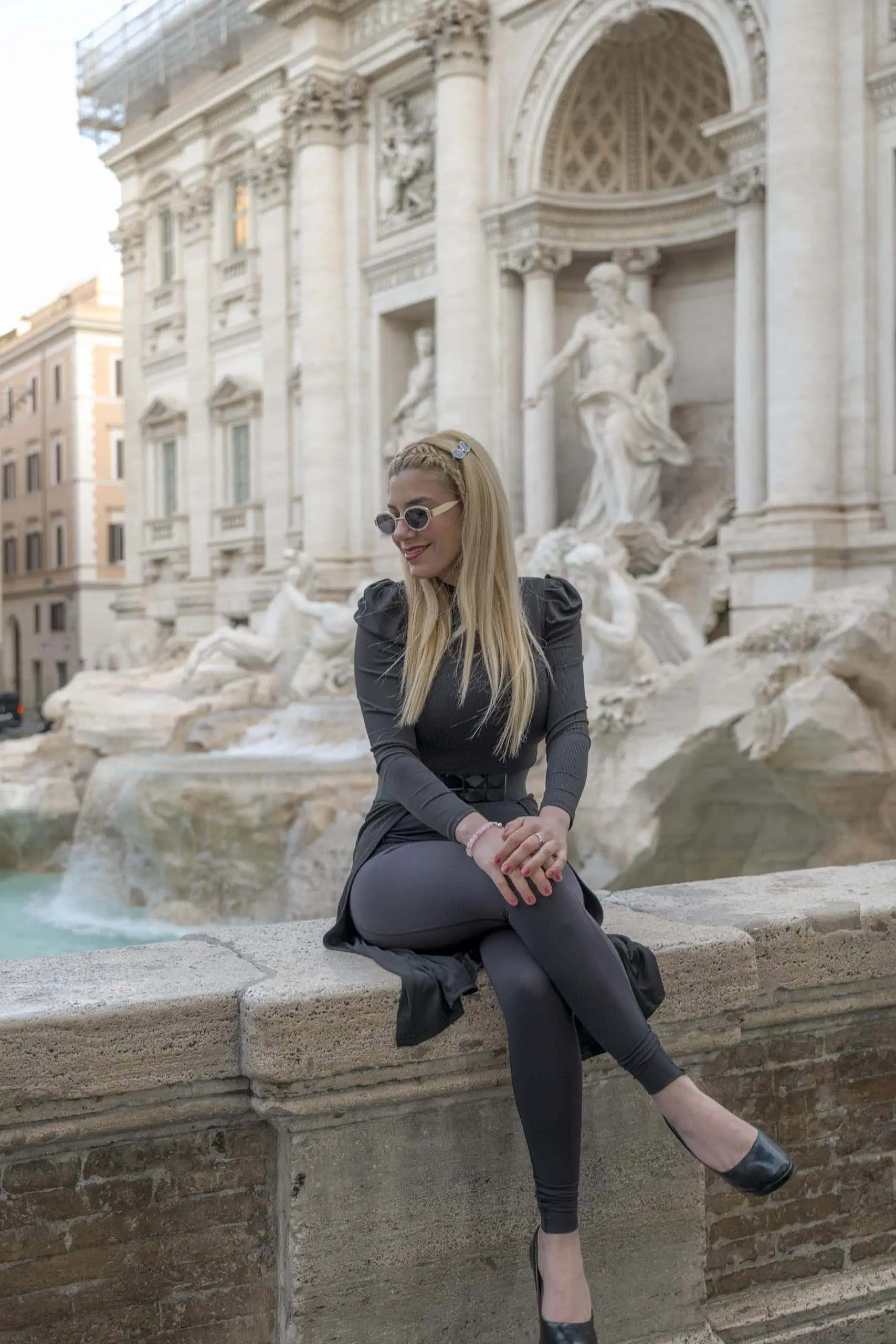
If you are visiting Rome for photography and want images of the city, the realistic and legal approach is ground-level sessions at the city's major landmarks and elevated viewpoints. A Signature session covers two locations across two hours. A Prestige session covers three locations across three hours. Both are delivered within 24 hours. Reschedule any session at any time at no cost.
TipBook at least 2-4 weeks ahead during peak season (April to October). Last-minute bookings are sometimes possible. Contact Finzi directly to check availability.
Quick answers to the questions visitors ask before they book.
“Finzi was incredible from start to finish. The photos were delivered within 24 hours and they are absolutely striking. He knew exactly where to go and when for the best light. Highly recommend.”
Pick a session. Choose a date. I handle the rest.
BOOK NOW