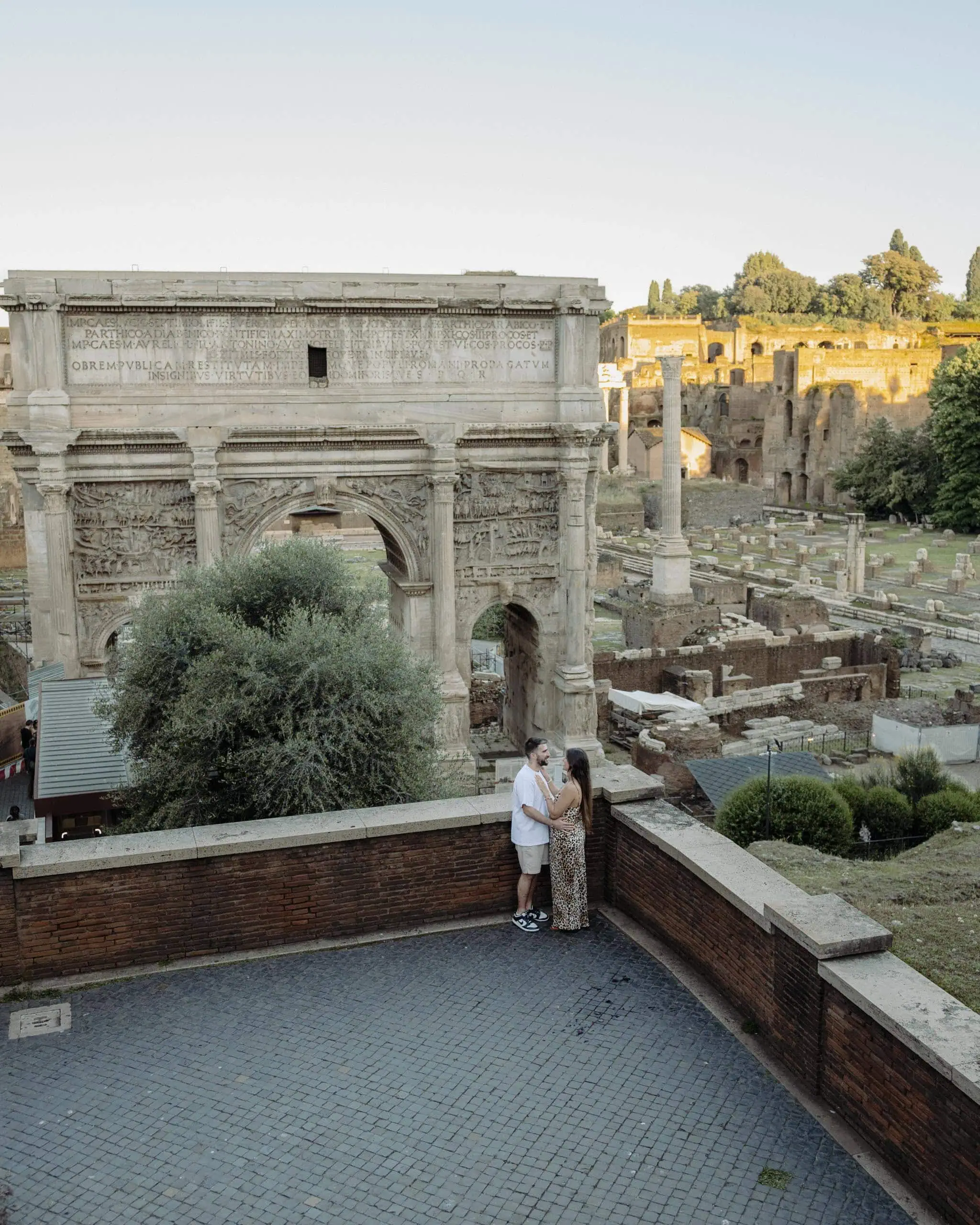
Season-by-season outfit guide for Rome photography sessions
For a winter photoshoot in Rome, wear mid-weight layers in earthy or deep jewel tones: a structured coat, a fitted knit, and boots with a low heel. For spring, shift to lighter fabrics in pastels, sage, dusty rose, or warm neutrals, with one removable layer for the cooler mornings. This guide covers both seasons back to back, explains why each recommendation matters on camera, and prepares you for Rome's specific terrain and light conditions so you arrive ready and nothing surprises you.
Rome's winter runs December through February, with daytime highs typically around 12°C (53°F) and cold nights that can approach freezing. Spring, from March through May, climbs from around 15°C (59°F) in March to a comfortable 22°C (72°F) by May, but mornings and evenings remain sharp until late April. Both seasons reward the person who plans the outfit rather than improvises at the hotel mirror.
Winter in Rome is mild compared to northern Europe, but it is not warm. According to climate-data.org, average temperatures in January range from a low of 3.5°C (38.3°F) to a high of around 12°C (53.8°F), with rainfall more frequent from December onward. That means you are outside in damp, occasionally overcast conditions, and anything too thin will leave you visibly uncomfortable in the photos. A good coat is not optional in winter, it is part of the image.
Spring changes the equation. Daytime temperatures rise steadily from March through May, and by late April the light is genuinely soft and golden for long windows each morning and evening. March remains unpredictable: an Italian saying roughly translates as 'crazy March, if the sun comes out, grab the umbrella,' and it holds. Layers that peel off by midday are the practical answer for March and April. By May, a single light jacket over a dress is usually enough.
TipCheck the forecast the night before and add one layer you did not plan to need. Rome weather in both seasons changes faster than most visitors expect.
| Package | Price | Duration | Photos | Locations |
|---|---|---|---|---|
| Essential | €300 | 1 hour | 30 photos | 1 location |
| Signature | €500 | 2 hours | 50 photos | 2 locations |
| Prestige | €800 | 3 hours | 60 photos | 3 locations |
A structured mid-length coat in camel, charcoal, deep burgundy, or olive is the single most important winter garment. It photographs cleanly against Rome's warm stone tones, it keeps you warm between shots, and it reads as intentional rather than improvised. Under the coat, a fitted roll-neck or fine-knit jumper in a tone close to the coat colour creates a long, clean silhouette. Avoid extremely bulky puffers in primary colours: they photograph as shapeless blocks and compete with the architecture rather than complement it. If warmth is the priority, a slim padded inner under a smart outer coat gives both.
For the lower half, tailored trousers or a midi skirt with thick opaque tights both work well. Dark denim in an indigo or black wash is reliable and versatile. Boots are the natural choice: leather ankle or knee boots in a neutral that matches or is one tone lighter than the coat keep the proportions clean. Flat or low-heeled styles are strongly recommended. Sessions cover 3 to 5 kilometres of walking on cobblestones, and a heel that is unstable becomes a problem before the first location ends. Keep one scarf in a slightly bolder colour than the rest of the outfit: it adds dimension without requiring a full outfit change between stops.
TipBring thin gloves you can slip off quickly between shots. Cold hands slow transitions and add unnecessary pauses to the session.
Spring opens up the palette considerably. Soft pastels, dusty rose, sage green, warm ivory, and light terracotta all photograph beautifully against Rome's cream and ochre stone. A midi dress or a skirt and blouse combination with one removable layer on top covers the full range from a cool March morning to a warm May afternoon. Linen and cotton blend fabrics move naturally in the breeze and avoid the stiffness that heavier winter fabrics create in outdoor images. Florals are popular in spring sessions, and they read well on camera as long as the scale is medium rather than very large.
Footwear in spring can be lighter: low-heeled mules, leather sandals in late April and May, or clean white trainers that match a casual-chic outfit all work. The same cobblestone caveat applies as in winter: anything with a narrow stiletto heel on San Sampietrino paving stones creates a real walking problem. Spring evenings are cooler than the afternoon suggests, so always bring one layer, even in May, if the session runs toward golden hour or later.
TipCoordinate with your partner or group in complementary, not matching, tones. One in sage and one in warm ivory photographs better than identical outfits.
Rome's buildings are predominantly warm: travertine marble, golden tufa stone, terracotta-red plaster, and creamy white facades. Colours that sit in the same warm family, camel, rust, sage, blush, warm white, and deep burgundy, complement that backdrop rather than fight it. Cool-toned brights such as electric blue or neon green can work in the right context but require careful placement to avoid clashing. Neutral palettes are the safest foundation in both seasons: build one accent colour in, keep the rest quiet.
"I always ask clients to avoid wearing the same colour as the wall directly behind them," Finzi says. "A camel coat against travertine limestone disappears. Move that same coat to a darker doorway and it pops. The colour itself is not the problem, the background is, and we move between 30 locations precisely so we can find the right contrast for what you're wearing."
TipBring a second outfit option if your session runs across two or more locations. A colour swap mid-session adds variety without extra preparation.
Rome's historic centre is almost entirely paved with San Sampietrino, the small rounded basalt cobblestones that cover streets around the Pantheon, Trastevere, Piazza Navona, the Spanish Steps, and dozens of other session locations. They are uneven, slippery when wet, and absorb heat in summer. In winter and early spring, a wet cobblestone surface is genuinely slippery. A narrow heel risks catching between stones with every step. Flat leather boots, block-heeled boots, chunky low-heeled ankle boots, or clean flat shoes are not a style compromise, they are the practical minimum.
Sessions run three to five kilometres of walking between spots. A shoe that is comfortable for a short walk to a restaurant becomes a real problem by the second hour of a Signature or Prestige session. Prioritise fit and stability first, then style. Within that constraint, a well-chosen shoe elevates the image. A pointed-toe flat leather boot in winter or a clean leather mule in spring reads as considered and polished on camera.
TipWear your session shoes for at least two hours before the day. New shoes on cobblestones cause blisters before the first location is done.
If your session includes any Vatican area locations or Rome's major churches, dress code rules are enforced at entry. The Vatican Museums official visitor information page states that "sleeveless and / or low-cut garments, shorts above the knee, miniskirts and hats are not permitted" at the Vatican Museums, the Sistine Chapel, St. Peter's Basilica, and the Vatican Gardens. This applies regardless of season. In winter and spring this is rarely an issue since appropriate layering naturally meets the requirement, but a sleeveless top under an open coat does not comply at the entry point.
The same covered-shoulders-and-knees standard applies informally at most major Roman churches, including Santa Maria Maggiore and San Giovanni in Laterano. A light scarf carried in a bag resolves the issue immediately and adds a useful styling element to outdoor shots. For outdoor-only sessions at the Colosseum exterior, Trevi Fountain, Piazza Navona, or Trastevere streets, no dress code applies beyond general public standards.
TipIf the Vatican is on your location list, wear or carry a layer that covers shoulders and knees at all times during that part of the session.
The Essential session runs one hour at one location. One complete outfit, chosen specifically for that location's light and backdrop, is exactly right. The Signature session covers two hours at two locations: if those locations are visually distinct, a colour accent change or a jacket on or off between stops adds variety without a full wardrobe change. The Prestige session spans three hours and three locations, which is long enough to justify bringing a second outfit entirely if you want clearly different looks across the set.
Winter sessions benefit from golden hour timing: the low winter sun creates long shadows and warm lateral light that flatters strongly. Spring offers a longer golden hour window and softer midday light than summer. Sunrise and the hour before sunset remain the optimal windows in both seasons. Book at least two to four weeks ahead for any winter or spring date, and earlier if you want a specific slot during a peak week around Easter or major spring holidays when Rome fills quickly.
TipDelivery is within 24 hours. Rescheduling is free and available anytime with no deadline attached.
Quick answers to the questions visitors ask before they book.
“Finzi made us feel completely at ease from the first minute. The photos were delivered the next morning and they are striking. We cannot recommend him highly enough.”
Pick a session. Choose a date. I handle the rest.
BOOK NOW